Posts about laboratory thermometer

Tag: laboratory thermometer

  • 7 Benefits of Using a Lab Water Bath in Experiments

    Top 7 Advantages of a Lab Water Bath in Scientific Experiments

    Precision and consistency are key in any laboratory. The lab water bath is a crucial unsung hero participant in many experiments. So it’s a straightforward little gadget, but it has all sorts of uses in biology and chemistry and even physics labs. So, let’s go apply to 7 great reasons to use lab water bath in your experimental work that additionally complements the use of other essential laboratory tools such as using a milk thermometer and a hydrometer for specific gravity.

    Precise Temperature Control

    Lab water bath images A major advantage of the lab water bath is the constant temperature. Crucial for temperature-sensitive reactions. Unlike direct heating devices, it distributes heat uniformly, minimizing the risk of overheating or scorching the samples.

    Best For: Heat Flammable things

    Because there’s no open flame, water baths are safer for heating volatile or flammable substances than using a hot plate for laboratory tasks. This reduces risk while guaranteeing maximum heat transfer.

    Sensitive instruments compatibility

    Instrument for specific gravity (e.g. hydrometer), laboratory thermometer, etc. do not have to work in stable temperature and humidity conditions. That perfect controlled condition is achieved by a water bath, which minimizes fluctuations that can alter data.

    Adaptabilility Into Experimental Setups

    A lab water bath becomes a seamless part of other tools like the much earlier-used cork borer (for use in plant physiology lab experiments), or even when prepping materials to be used inside of a lab centrifuge machine. It’s a universal unit that supports a broad range of scientific techniques.

    Warm-Up for Bio Samples

    Harsh heating methods are out of the question for enzyme or fragile tissue studies. This water bath produces slow, constant heating — ideal for biological study.

    Education Demonstration Support

    Concepts like the plug key diagram and use of rheostat are usually demonstration-based as they involve controlled environment setup. The water bath is a common method for heating up different types of fluid based mediums and provides students working with circuit-based or thermal experiments a way to come to understand heat transfer practically.

    Durable and Minimal Maintenance Required

    Seven Water Baths Durable and Simple to Maintain Water baths need little maintenance. They are a long-term investment, a necessity with your laboratory centrifuge machine or hot plate for your laboratory tasks.

    Final Thought

    A lab water bath is an essential piece of equipment in applications where accuracy, safety, and reliability are critical. Abreast with other equipment like cork borer, laboratory thermos, rheostat etc to make a effective comprehensive laboratory.

    To summarize, a lab water bath is an invaluable piece of equipment that provides uniform temperature regulation, perfect for delicate experiments. Whether you use a laboratory centrifuge machine, laboratory thermometer, or specific gravity hydrometer, a stable heat source will ensure accurate results. However, consistent heating is required even while using a cork borer, hot plate for laboratory, or while referring to a plug key diagram and the use of rheostat. MVTEX – highly valuable tools for laboratories/core devices with international standards. Observer Production Series—all-purpose/lab based production-ready performance.
  • Why Choose a Digital Laboratory Thermometer?

    Why Use a Digital Laboratory Thermometer? 

    In the high-tech laboratories of today, precision and safety take precedence. One important tool that embodies these values is the digital laboratory thermometer. The old-style thermometers have done science a great favour for many centuries, but the digital versions have several unique benefits that make them the number one choice for professionals. Here’s a look at why you should switch and what it will do for your lab running.

    What is Digital Laboratory Thermometer?

    Digital Laboratory Thermometer An instrument used to measure temperature with electronic sensors. Unlike the traditional thermometers that work on the principle of the expansion of a liquid (mercury), digital thermometers show the result on an electronic screen which shows a quick and also a reliable result.

    Why Digital Rather Than Traditional?

    Accuracy and Precision

    These devices offer very accurate temperature readings, which is vital for more sensitive experiments. This level of precision is especially critical when utilizing machines such as the laboratory centrifuge machine and during chemical reactions that need to be thermally controlled very precisely.

    Safety

    As such, traditional thermometers – and especially one with MERCURY PURIFIED in it – can be a health hazard if broken. Mercury is poisonous, and exposure poses serious risks. This risk is removed with digital thermometers, which means your lab is a much safer place.

    Ease of Use and Readability

    Digital screens make squinting at narrow glass tubes or the levels of meniscus a thing of the past. Zoo plus is your one-stop shop for all pet products, including pet accessories, pet products, pet toys, and pet food.

    Versatility

    Digital thermometers are capable of many lab type applications. They accompany a lot of lab instruments similar to the hydrometer for specific gravity that must adapt to temperature for a correct studying, or when inserting into small samples with one thing just like the cork borer.

    Strength and Value over Time

    And while they may cost a little bit more upfront, digital thermometers tend to last longer and are less prone to breaking than old-school glass ones. This makes them a wise investment for any laboratory setup. 

    A digital laboratory thermometer is not just a modern upgrade for your lab, but also an essential addition to your laboratory practices. As a part of your core lab instruments list with other important setups including MERCURY PURIFIED alternatives, laboratory centrifuge machine, lab water bath, cork borer, hot plate for laboratory and hydrometer for specific gravity, your lab will be an accurately equipped space for scientific discovery. Be smart—go digital Black or Red Lab safety imaging page Attachments.

    Conclusion:

    Digital laboratory thermometer—for precise, safe and easy use, far exceeded the function of laboratory instruments such as the Mercury purified thermometers. To buy each and every thing what you want for your laboratory sports like cork borer  laboratory centrifuge machine hydrometer for specific gravity  lab water bath and hot plate for laboratory  shift your shop to  MVTex Science Industry  It means that every instrument have gone through most severe check ups with modern state of art instruments like advanced laboratory thermometers, which needs to be accurate and reliable by modernisme of science.

  • How to Read a Laboratory Thermometer Accurately

    Getting Accurate Readings from a Lab Thermometer

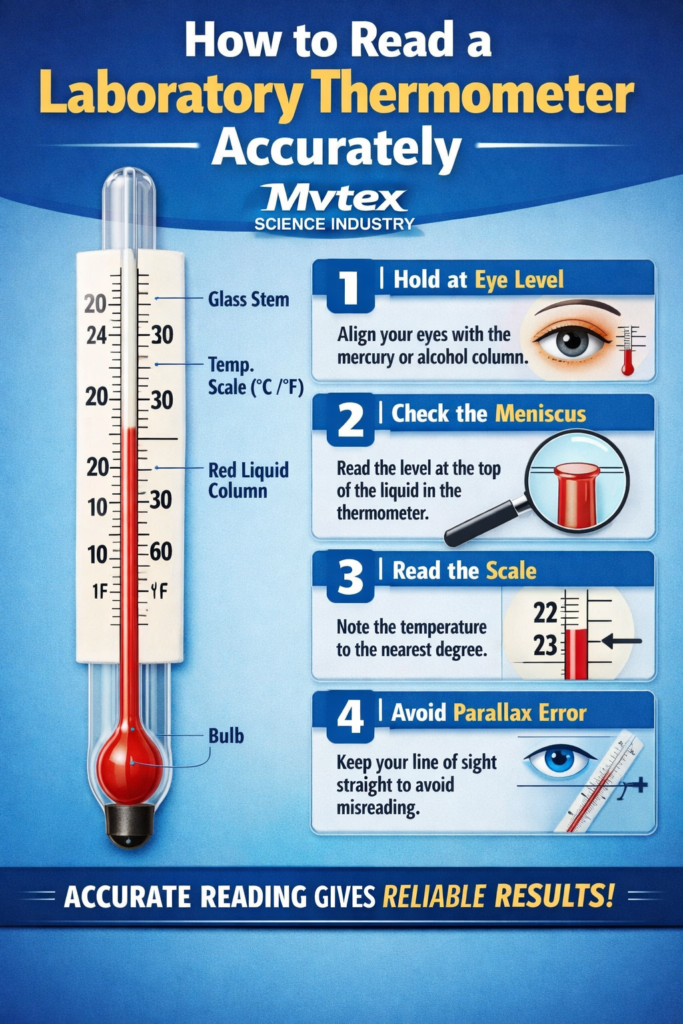
    A laboratory thermometer is crucial for measuring temperature accurately during experiments, so knowing how to read one correctly is important. Be it heating a solution with a hot plate for lab purposes or monitoring cooling in a lab water bath, this is a skill that can really impact your results in the lab.

    First of all, make sure that the laboratory thermometer is clean and not damaged. Put it upright in the material, not allowing it to touch the sides or bottom of the container. This protects from distortion by heat transfer. Wait a few moments for the mercury (or alcohol) column to stabilize before taking a reading.

    Always keep your eye level with the liquid column of the thermometer. Because of the possibility of parallax error when reading from above or below, inaccurate results will be displayed. Record the temperature where the top of the liquid column meets the scale. Check the scale increments—some thermometers read in 0.5°C or 1°C intervals.

    Lack of heat is one of the biggest reasons why lab equipment fails to maintain accuracy. - R&D in some domains such as laboratory centrifuge machine may see temperature-sensitive samples pre-checked prior to entering it via a laboratory thermometer. Likewise, many devices for example a hydrometer used to measure specific gravity generally require a temperature value to be able to calibrate appropriate density measurements.

    If you’re all about the electrical circuits in the physics labs, be sure your plug key diagram setup doesn’t get in the way of where you place your thermometer.

    The correct presentation of organizing tools like a cork borer can hinder the damage of a thermometer when not in use. Everything in a lab, small or large, contributes towards accurate results.

    Reading temperature correctly is no mere technical ability — it’s a basis for good science. Handle your laboratory thermometer carefully and maintain good measurement practices to achieve the most reliable results.

    Conclusion:

    Reading a laboratory thermometer accurately is very important to perform the experiments consistently and safely. Knowing its scale and applying it correctly gives you accurate temperature readings. Select Mvtex — your companion in scientific superiority for all useful and excellent lab equipment cork borer, laboratory centrifuge machine, laboratory thermometer, hydrometer for specific gravity, lab water bathroom, hot plate for laboratory, and plug key diagram.

  • Tips for Effectively Using a Cork Borer in Projects

    How a Cork Borer influences the effectiveness of laboratories 

    One of the many useful tools in scientific investigations is a device called a cork borer, which allow you to create holes in rubber or cork from glassware— a simple device and a must-have item in any laboratory that involves the use of glass labware. In any type of filtration setups or insertions of tubing into stoppers, the cork borer is an astute mechanism for accuracy and safety alike. Here are some key tips to become more efficient when using a cork borer in your projects.

    Select the Right Size Borer

    When selecting a cork borer to use, first determine the size of the tubing or equipment to be inserted and select a cork borer with an appropriate diameter size before starting the project. If not, the sizes will not match, which might cause erroneous fittings, leakage, or damage to the stopper material.

    Dulcify the Cork or Rubber Stopper

    To ease boring, soak the cork or rubber stopper in warm water for a few minutes to soften it. It allows for smoother penetration and minimizes crystal fractures and irregular holes. If using soda glassware, make sure the stopper fits tightly to prevent air leakage.

    Use a Lubricant

    What we do is use a small amount of glycerin or water to lubricate the cork borer so that you can get a clean cut through the cork in one go. This comes in especially handy with inflexible materials.

    Insert with a Twisting Motion

    Instead of pushing the cork borer directly through, use a gentle twist with consistent pressure. This technique creates a clean, round hole without ripping the cork or stopper.

    Work on a Stable Surface

    Bore the cork or rubber stopper while it is resting on a solid, non-slip surface. This ensures stability and reduces the risk of injury or mistakes occurring during the moving process.

    Clean the Borer After Use

    Always clean your cork borer well after using it for your project. The residue remaining inside the tube has the potential to affect precision in future uses, especially with MERCURY PURIFIED or similar projects.

    Conclusion

    That is one of the useful tools paper. This tool is amazing when using it in the right way in laboratories. This will help you get the exact measurements, protect your project from damage, and keep them safer. If your laboratory work involves soda glassware or something with MERCURY PURIFIED, the will know better how to handle this to avoid disappointments.

    Best Practices Usage - A cork borer in laboratory projects You require accurate and clean cuts whether you’re doing soda glasswork, utilizing a laboratory centrifuge, or using a laboratory thermometer. Furthermore, safety measures must always be our first concern when dealing with any substance, even something as common as MERCURY purified.

    So if you want high-quality glassware used in laboratory settings or a dependable instrument, such as a hydrometer for specific gravity, you can trust the likes of MVTex for the right products. Leveraging the right tools can make your experiments faster and more effective overall.

  • How to Measure the Bob Weight for Pendulum Experiments

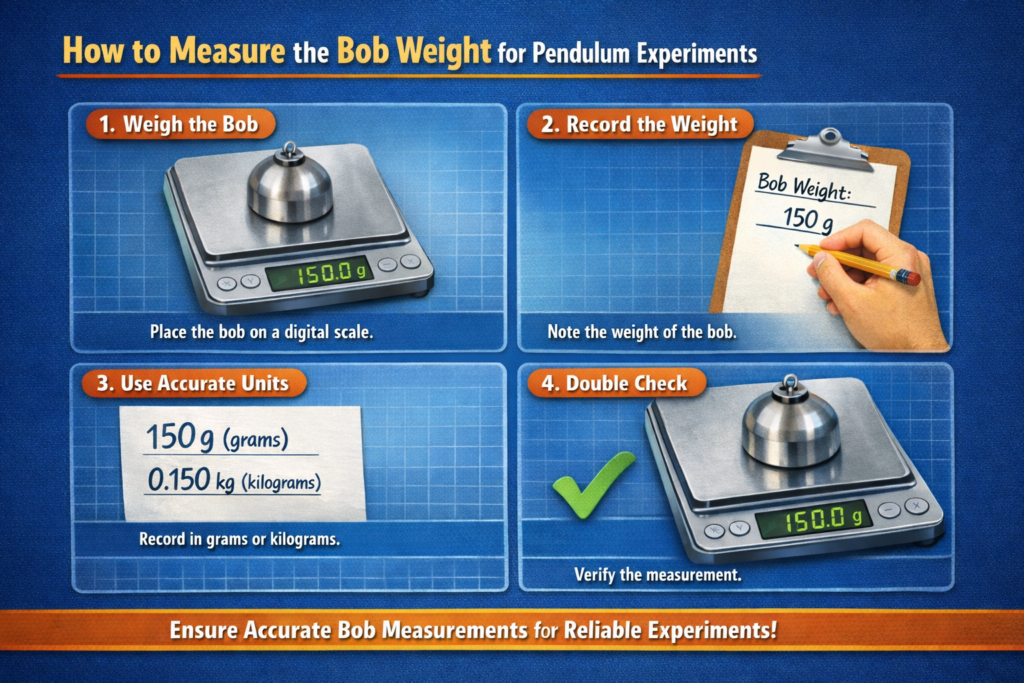
    Calculating & Measuring  the Bob Weight for Pendulum Experiments

    One of the most important experiment in physics, pendulum experiment, and helps us to understand concepts like oscillation, time period, gravity, etc. While one of the most important parts of pendulum experiments is measuring the bob correctly to get accurate results. In this article, we explain how to properly find out how much the bob weighs.

    Choosing the Right Bob

    The bob of a pendulum may be a metal sphere, a disk, or any solid object suspended from a fixed point. The bob weight directly influences the pendulum’s movement and needs to be accurately measured for calculations.

    How to Use a Personal Weighing Scale

    PERSONAL WEIGHING SCALE: If the bob is relatively heavy, the simplest way to measure the weight is to use a PERSONAL WEIGHING SCALE. However, smaller bobs look more veridical on a precision balance.

    Michele with the second spherometer prototype.

    The radius can be obtained using the spherometer least count method and therefore volume and mass can be found from that using the density formula for small metallic or spherical bobs.

    Hmmm, how about the jaw clamp as a stabiliser?

    So, when measuring the bob’s dimensions, using a JAW CLAMP will helps keep the stability and Prevent errors due to movement. This is used to keep the bob firmly in place while taking measurements.

    1. How to Find Weight from Volume and Density

    If a bob has an irregular shape and a mass cannot be weighed directly, another method can be used to find its volume, which uses water displacement method with the help of chemistry test tubes. After determining the volume, multiply it by the density of the material to get the weight.

    Using a Precision Balance to Measure Weight

    Laboratory balances have unique features that give highly accurate and precise results. By placing the bob on the balance with care, the human error is removed and the measurement is accurate.

    Using a Silicone Rubber Tube for Precision

    The use of a silicone rubber tube to suspend the bob if this method is employed should suffice to reduce the vibration effects and stabilize the process as a whole in this case.

    Conclusion

    In order for physics experiments to produce reliable results, the weight of the bob of pendulum must be accurately measured. You can perform accurate measurements using instruments such as a PERSONAL WEIGHING SCALE, spherometer least count, JAW CLAMP, and chemistry test tubes. Regardless if you go with solution mass or a density based calculation, accuracy would help add validity to your experiment. So, the next time you do a pendulum experiment, use these steps for precision and reproducibility.

  • Working Principle of Water Bath

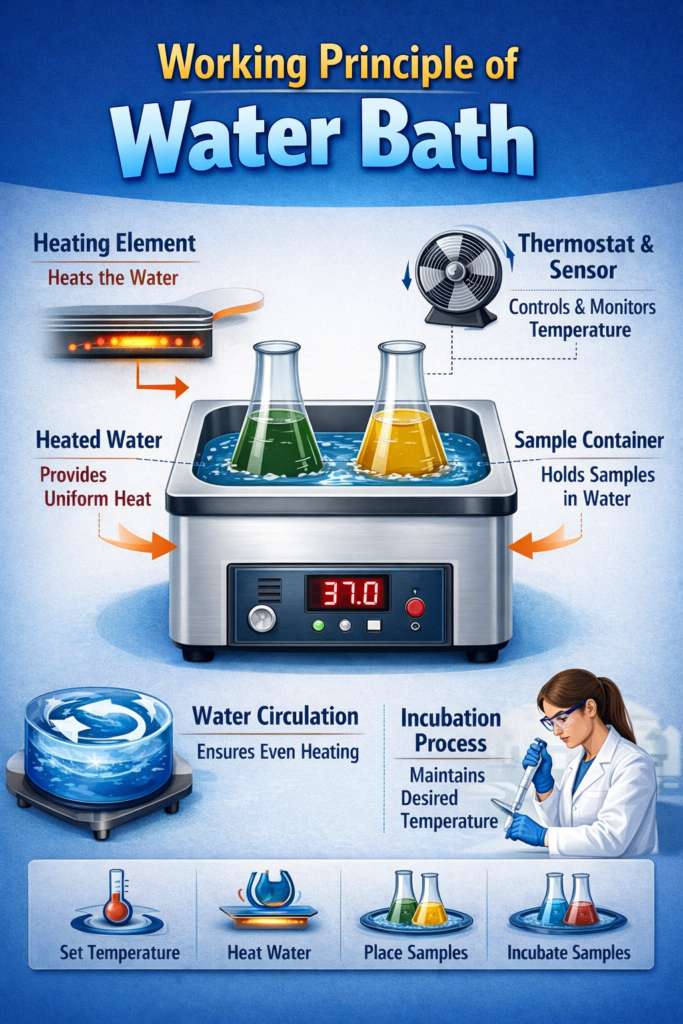
    You are well aware that having control would bring the precision of your laboratory techniques to the next level. One of the critical tools that make such precision possible is the lab water bath. These versatile machines, used in all kinds of scientific fields such as chemistry, biology, and medical research, are designed for taking care of tasks that need temperature control. But how does it work, and what are its main uses?

    Fundamentally, a water bath works on the principle of convection. This device usually includes a heat-safe container full of water which requires different heat sources such as electric heating elements for heating. The lab water bath controls temperature to make experiments accurate. When performing procedures including but not limited to incubating samples, warming reagents, or performing enzymatic reactions, obtaining stable temperature is critical.

    See laboratory thermometer This is commonly used along with the water bath to obtain a consistent measurement of the water temperature. In this way, scientists can guarantee that the samples are heated or maintained in the adaption for the best outcomes because of the cutting-edge calibration of these thermometers. This precision is especially crucial for uses like DNA denaturation or gel electrophoresis, where small variations in needed temperature can result in large mistakes.

    The hot plate for laboratory is also common, aside from the need for lab water bath. Though hot plates are effective for simple heating needs, they do not provide the uniform heating environment possible with a water bath. By providing a constant flow of temperature, the water bath provides an effective means of maintaining consistent temperatures that will result in more reliable experimental results.

    The next important thing in water bath control is the plug key diagram, which defines the wiring for safe operation of the heating element. Proper connection and wiring will make sure that the units work effectively and not provide risk of overheating or short-circuits.

    In addition, the rheostat can be employed for controlling the temperature of a water bath. A rheostat is basically a variable resistor that works to control the amount of current flowing into the heating element, consequently giving a precise control over the temperature. Department of Labor ensures that different temperatures are sustained over a longer duration, which is useful in benefitting this feature.

    In addition, a hydrometer for specific gravity is another device that needs to be used along with the water bath. In cases where specific gravity needs to be determined at a controlled temperature, the water bath is ideal.

    Conclusion Lab water bath is indispensable laboratory equipment that requires temperature control and accuracy. Knowing how a water bath works can greatly contribute to scientific study and experimentation, from its principle of convection, all the way to how it interacts with other lab equipment. Whether it involves preserving enzyme activity or reheating samples, this apparatus highlights the crucial role precision plays in the scientific method.